Zambia
TMA works with Zambia to ease the movement of goods across its many borders and connect its economy to regional markets.
Eight Borders, One Copper Economy, Many Roads to the Sea
Zambia is a landlocked country in Southern Africa with its economic activity concentrated around Lusaka, the capital and the Copperbelt, both of which serve as the country’s main commercial hubs. It shares borders with eight countries – the Democratic Republic of Congo, Tanzania, Malawi, Mozambique, Zimbabwe, Botswana, Namibia and Angola – making it both a land-linked nation and a natural bridge between Southern and East Africa, offering potential to serve as a regional trade and transit hub.
However, its landlocked status also creates trade inefficiencies, with high costs and delays along regional routes in multiple countries, making improved connectivity and border efficiency key to unlocking its trade potential. Mining contributes approximately 12% of Zambia’s GDP and accounts for around 75% of its export earnings, yet it employs only 2.1% of the population. By contrast, agriculture provides livelihoods for more than half the population, yet contributes less than 5% to GDP.
This gap between economic output and employment signals a need for a more inclusive economic growth model that integrates high employment sectors, such as agriculture, into trade and industrial development strategies, through strengthening trade connectivity, boosting competitiveness, and harnessing the potential of trade corridors. Regional integration is a priority for Zambia as it is a member of two major regional trade blocs – the Common Market for Eastern and Southern Africa (COMESA) and the Southern African Development Community (SADC). While this dual membership reflects Zambia’s commitment to regional integration, it also introduces complexity. Businesses often struggle to navigate overlapping trade regimes, differing rules of origin, and regulatory standards, which can limit the private sector’s ability to fully benefit from regional market opportunities. TMA supports the Government’s efforts to overcome these barriers, with a focus on trade facilitation, better infrastructure, and reduced regulatory inefficiencies, positioning the country to take full advantage of its strategic location and regional trade ambitions.
From early milestones to a 2030 vision
In 2020, Zambia faced an urgent challenge of maintaining the movement of essential goods through its borders amidst a global pandemic. The Government of Zambia in partnership with TMA responded swiftly, supporting emergency trade protocols while laying the foundation for deeper, long-term reforms in cross-border trade infrastructure and policy. This marked TMA’s entry into Zambia.
The initial response focused on operational continuity. More than 140,000 protective items, including PPE, thermometers and sanitation equipment, were distributed to frontline border staff. Public awareness campaigns were rolled out on radio and billboards, and signage to improve social distancing and traffic flow was installed at high-traffic border points, from Nakonde to Kapiri Mposhi, Mpika, Kasama, Mbala Junction, Mpulungu Harbour and Zombe. These efforts not only kept trade flowing but also safeguarded frontline workers during a period of uncertainty.
The crisis response evolved into a broader agenda to modernise Zambia’s role in regional trade. Nakonde, a major entry between Zambia and Tanzania, was prioritised for a full one stop border post (OSBP) upgrade. Planning for the infrastructure reform was done collaboratively by TMA, Trade Catalyst Africa and Tony Blair Institute in alignment with Zambia’s ambitions to strengthen regional integration. Now, phase one of a major infrastructure project, funded by UK is underway and set for completion in 2025.
But upgrading OSBP infrastructure is only one part of the job. The operationalisation of the Mchinji–Mwami OSBP, Zambia’s first bilateral OSBP with Malawi has demonstrated that institutional capacity, harmonised procedures and frontline coordination are just as critical. Here, TMA worked closely with the Ministries of Trade and Industry in both countries to co-develop joint procedures, training protocols, and public information campaigns. These efforts led to more predictable clearance processes, greater inter-agency coordination and improved experiences for traders – especially small scale women cross-border traders. The Mchinji-Mwami OSBP was officially launched in December 2022.
As Zambia positions itself as a key player in regional supply chains, the next phase of TMA’s support is focused on embedding systems-level reform. The emphasis is on transforming trade from a transactional process into a lever for national development-anchored in institutional efficiency, infrastructure connectivity, and inclusive growth. Between now and 2030, the programme will continue working in lockstep with the Zambian Government and regional bodies to strengthen cross-border trade infrastructure and reduce procedural bottlenecks. Strategic priorities include:
- Support corridor development and border management, by establishing joint border committees at Nakonde, Chirundu, Kazungula, Kasumbalesa, and Mwami.
- Digitising customs and sanitary and phyto-sanitary systems (e.g., ASYCUDA, Single Window); cross-border data exchange (with Tanzania, Mozambique, Zimbabwe, South Africa); and installation of smart gates, RFID tracking, and cargo tracking integration.
- Enhanced trade environment by capacity building for government and the private sector; strengthening implementation of AfCFTA, the WTO Trade Facilitation Agreement, and regional protocols; enhancing the Authorised Economic Operator (AEO) programme; and introducing real-time non-tariff barrier (NTB) reporting tools.
- Support standards and SPS compliance, by strengthening electronic phytosanitary certification (ePhyto); harmonising standards and risk management protocols; and upgrading border laboratory capacities and training.
Trade Reforms, in Motion

Latest from Zambia

Results on the Ground
Operationalising Mchinji-Mwami Border
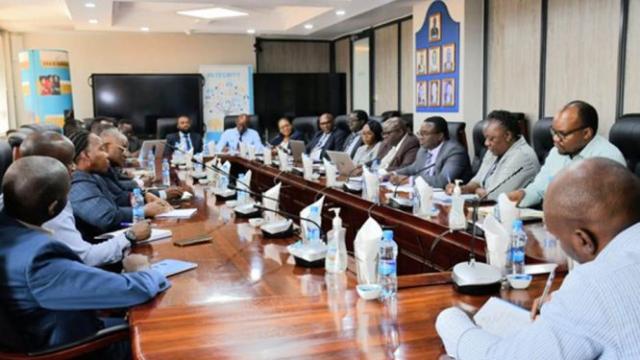
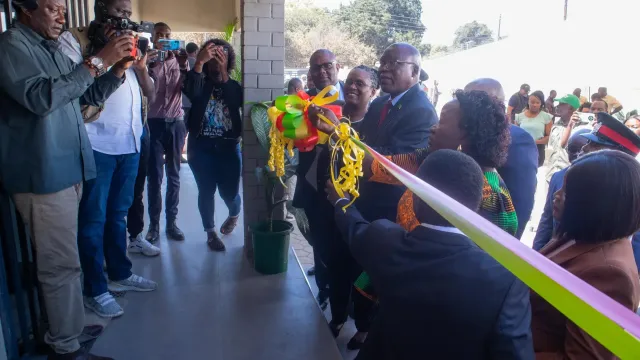
Building an OSBP is only half the job. Without harmonised and integrated procedures, trained personnel, and public awareness, the infrastructure won’t deliver faster or cheaper trade. TMA supported the operationalisation by working with Trade and Industry Ministries to develop a joint procedures manual, training materials, and targeted awareness campaigns. These efforts ensured the OSBP functions as intended, improving coordination, promoting compliance, and highlighting economic benefits, especially for border officials, local communities, and informal WCBTs (Women Cross-Border Traders). The OSBP was officially inaugurated by the Presidents of the two countries in December 2022.
Safe Trade Emergency Facility
During the COVID-19 pandemic, we partnered with the Government of Zambia to strengthen health and safety at major trade hubs. Over 140,000 protective items, including PPE, handwashing stations, and thermometers, were delivered to frontline staff. Public awareness campaigns ran on radio and billboards, while improved signage for social distancing and traffic flow was installed at Nakonde and key customs points along the corridor, including Kapiri Mposhi, Mpika, Kasama, Mbala Junction, Mpulungu Harbour, and Zombe.
Nakonde One Stop Border Post
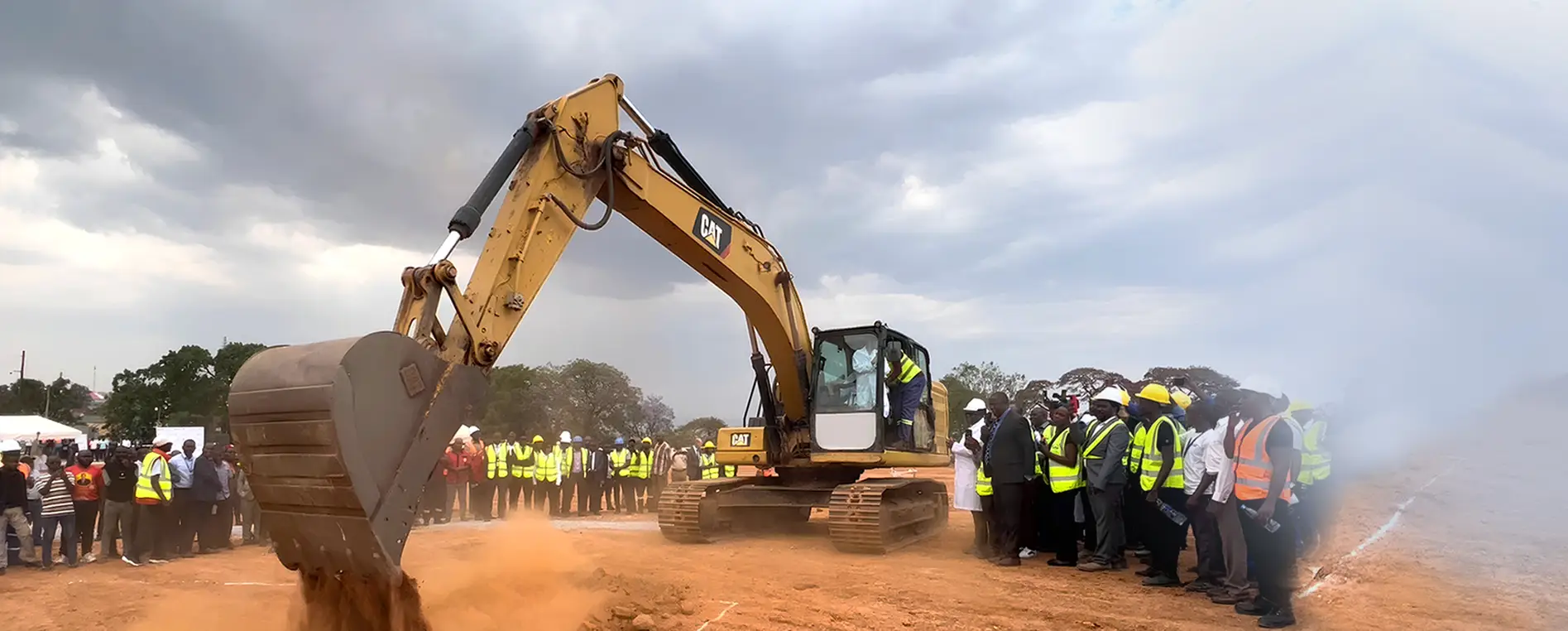
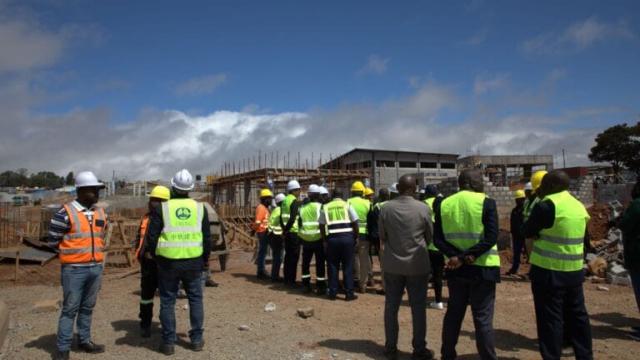
With UK support, TMA is working with the Government of Zambia to modernise the Nakonde OSBP, a critical gateway on the Dar es Salaam Corridor, to cut delays, and reduce trade costs. Chronic congestion has seen cargo clearance times exceed 60 hours, despite annual truck volumes reaching 124,000 and cargo flows doubling to 6.2 million tonnes. TMA is upgrading infrastructure: i) New access roads, buildings, ICT systems, and a drive through cargo scanner. Phase 1 is at 90% completion as of July 2025. Targeted
Results
- 1Border cargo clearance time reduced from over 60 hours to under 10 by 2030.
- 2A 15% average reduction in costs to move goods and services across the border.
Plant Quarantine and Phytosanitary Service Laboratory Upgrade
After the 2023/24 drought slashed Zambia’s maize output by over 50%, the government announced plans to import 650,000 metric tonnes from Tanzania. To support this, the UK funded an upgrade of the Nakonde border phytosanitary lab with advanced testing equipment and solar backup. Since March 2025, the upgraded facility has accelerated certification and clearance, enabling faster, safer food imports and strengthening food security.