Plant Quarantine and Phytosanitary Service (PQPS) Project
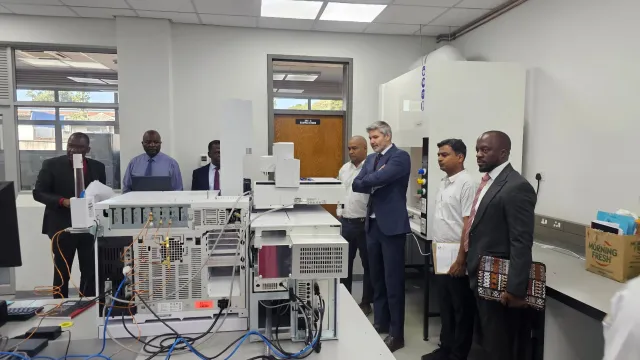
The commissioning of the upgraded Plant Quarantine and Phytosanitary Service (PQPS) laboratory at the Nakonde One Stop Border Post (OSBP) responds to an urgent food security crisis in Zambia, occasioned by the 2023/24.
- Period
- September 2024 – March 2025
- Countries
- Zambia
- Implementing partners
- The Government of Zambia, through the Ministry of Agriculture’s Plant Quarantine and Phytosanitary Service (PQPS), TradeMark Africa (TMA) Food and Agricultural Organization (FAO) The UK Government, as the primary donor.
- Participants
- Main participants in the project included technical staff from Zambia’s PQPS stationed at Nakonde OSBP, trade and border officials responsible for maize imports, laboratory technologists trained to operate diagnostic equipment, and officials from the Tanz
Project rationale
The commissioning of the upgraded Plant Quarantine and Phytosanitary Service (PQPS) laboratory at the Nakonde One Stop Border Post (OSBP) responds to an urgent food security crisis in Zambia, occasioned by the 2023/24 drought, described as the worst in four decades. The drought significantly diminished national maize production, placing nearly half of the population at risk of food insecurity and impacting 84 of the country’s 116 districts. In response, Zambia turned to neighbouring Tanzania to bridge the maize deficit, prompting the need for rapid, reliable testing of imports at the border to ensure both plant health safety and timely clearance. The revitalisation of the Nakonde lab aims to reduce testing turnaround times, improve phytosanitary compliance, and bolster regional trade in agricultural commodities.
Implementation Period (September 2024 – March 2025)
The rehabilitation and equipment installation were implemented between September 2024 to March 2025, at which point the facility was opened and became fully operational. The project also included technical bilateral engagements that continued through April and May 2025 to support regional harmonisation of phytosanitary protocols between Zambia and Tanzania.
Implementation Strategy
The implementation strategy focused on enhancing the technical capacity and infrastructure of the Nakonde PQPS laboratory to conduct on-site diagnostics for maize imports. This reduced reliance on centralised laboratories in Lusaka, significantly cutting clearance times from 72 hours to an average of 30 hours. In parallel, the strategy supported cross-border cooperation through bilateral engagements between Zambia and Tanzania to align phytosanitary standards and share rapid testing tools for common pests and diseases. These efforts aimed to foster trust, facilitate efficient trade, and protect national plant health.
Project Value
The laboratory upgrade, valued at ZMW 3.8 million (approximately $136,000), was funded by the UK Government through TradeMark Africa (TMA). The investment provided state-of-the-art diagnostic equipment including Polymerase Chain Reaction (PCR) machines, microscopes, centrifuges, and ELISA testing kits, enabling the detection of high-risk crop diseases such as Maize Lethal Necrosis Disease (MLND). Additionally, critical infrastructure enhancements included solar backup power, water reticulation, an overhead water tank, and air-conditioning to ensure operational continuity.
Expected outcomes
- Accelerated Testing and Clearance: Turnaround time for maize import testing reduced from 72 to 30 hours, ensuring faster access to critical food supplies.
- Enhanced Food Security: Strengthened capacity to detect and manage threats such as MLND, safeguarding maize imports from pest and disease risks.
- Improved Border Efficiency: Modernised laboratory infrastructure supports continuous operations, even during adverse weather or power interruptions.
- Strengthened Regional Trade: Harmonised phytosanitary protocols and joint diagnostics with Tanzania promote smoother, safer trade flows across borders.
- Increased Resilience: The initiative positions Zambia to better manage future agricultural shocks and supports the long-term sustainability of regional food systems.