Quality & Value of Traded Goods
Harmonising Standards, Sanitary and Phytosanitary frameworks significantly enhances efficiency in trade flows.
Higher Standards, Higher Value
Standards are the lingua franca of world trade, conveying consistent and understandable information between trading partners. Increasing harmonisation between country frameworks significantly enhances the efficient flow of trade. At the same time, global off-takers, particularly in the agricultural sector, are applying increasing environmental, social and governance standards to production and trading, with access to destination markets depending on a company’s ability to raise their compliance levels. Supporting African businesses to consistently adhere to global standards and strengthening their voices, will be the gateway to increasing exports.

In trade value supported through 74 harmonised EAC Standards including 41 gazetted for edible oils
Source: TMA, Annual Review Report, 2024
Where We Focus
Stronger standards bodies
Improve national implementation of international standards, through National Standards Bureaux.
Standards-aligned regulation
Support Governments to implement standards and technical regulations consistent with world trade rules.
Regional harmonisation
Facilitate harmonisation of technical regulations at continental, regional and national levels.
Testing and certification capacity
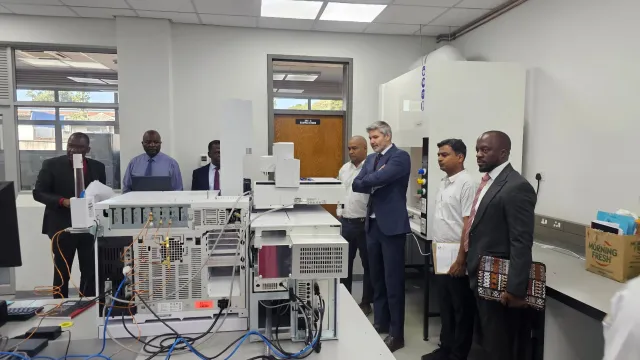
Help develop standards and conformity assessment services at national and regional level – including laboratory capacity, inspection and certification services, and product certification services in both the public and private sectors.
Mutual recognition
Establish Mutual Recognition Agreements to build mutual confidence between countries on conformity of assessment procedures and facilitate the acceptance of goods and services everywhere on the basis of one assessment.
Emerging Results 2010–2024
Harmonisation
In 2024, 74 EAC standards were harmonised, including 41 that were gazetted for edible oils, supporting a $2 billion trade sector.
(Source: Annual Report 2024)
Reduced Testing Time
Harmonisation of 66 standards in the EAC contributed to a 74% reduction in testing time and an average 59% reduction in testing cost.
(Source: TMA Strategy 1 Evaluation Report 2017)
Reduced Certification Time
Tanzania showed a 58% reduction in certification time, from 50 to 21 days, while the time taken for a sample analysis has shrunk from an average of 5.5 hours to 10 minutes, with lab efficiency in turnaround time for sample analysis improving from 76% to 87%. The number of samples tested in a month increased from an average of 250 to over 400.
(Source: TMA Project Report)
Projects, Case Studies and Impact




Explore Our Other Portfolios

Resilient & Inclusive Trade
Trade facilitation enables vulnerable groups to adapt during a crisis, while addressing the underlying causes …
View Portfolio
Greening Trade
Promoting sustainable logistics, cutting emissions on trade corridors, and supporting practical innovations wh…
View Portfolio
Physical Connectivity: Ports, Borders, Roads
Improving roads, ports, borders and trade corridors to move goods faster and reduce the cost of doing business…
View Portfolio
Digital Trade Systems
Modernising customs and cross-border trade systems so that businesses spend less time on paperwork and more ti…
View Portfolio
Trade & Investment Environment
TMA takes a multi-level approach, addressing the three key levels of coordination necessary: continental, regi…
View Portfolio