Tanzania Mercantile Exchange
Commodity trade in Tanzania has historically been characterised by fragmented markets, weak price transparency, long transaction cycles, and limited regulatory oversight, reducing returns for farmers and eroding public revenue..
- Period
- 2018-2027
- Countries
- Tanzania
- Implementing partners
- • Tanzania Mercantile Exchange (TMX) • Warehouse Receipts and Regulatory Board (WRRB) • Cashew Nut Board of Tanzania (CBT) • Agricultural Marketing Cooperative Societies (AMCOS) • Tanzania Cooperative Development Commission (TCDC)
- Participants
- Traders, farmers, farmers groups (AMCOS), TCDC, warehousing board (WRRB), miners, government Ministries, Agencies and Departments (MDAs) related to agriculture, livestock, and minerals (including gemstones); and other private sector operators related to a
Project rationale
Commodity trade in Tanzania has historically been characterised by fragmented markets, weak price transparency, long transaction cycles, and limited regulatory oversight, reducing returns for farmers and eroding public revenue. TMA supports TMX, Tanzania’s first licensed multi-commodity exchange regulated by the Capital Markets and Securities Authority (CMSA), to address these constraints. TMX provides a digital platform that connects farmers, cooperatives, traders, buyers, and regulators within a structured, rules-based trading environment, improving price discovery, payment security, and market governance.
Target Results
- Efficient, transparent, and secure commodity trading system
- Improved farmer incomes through higher farm-gate prices
- Increased trading volumes and commodity diversity · Improved revenue collection for government and local authorities
- Enhanced governance, coordination, and compliance in commodity trade
Implementation strategy
TMX operates as a digital marketplace that integrates trading, warehousing, and regulatory systems to improve efficiency and transparency across commodity value chains
- Digital Trading Platform: TMX operates a secure Online Trading System enabling competitive, real-time commodity trading. The platform links farmers, cooperatives, warehouses, buyers, and regulators through a single digital environment – reducing information asymmetry and establishing trusted price discovery across value chains.
- Integrated Value Chain Model: TMX functions as an end-to-end value chain system, not a simple trading portal. Farmers participate through cooperatives; warehousing and quality assurance underpin tradeable lots; buyers compete in online auctions under clear rules. This model reduces reliance on informal intermediaries and strengthens governance across the trading process.
- Technology Infrastructure: Investment in secure hosting and ICT infrastructure ensures platform stability and scalability. The system architecture accommodates multiple commodities and growing transaction volumes as market uptake expands
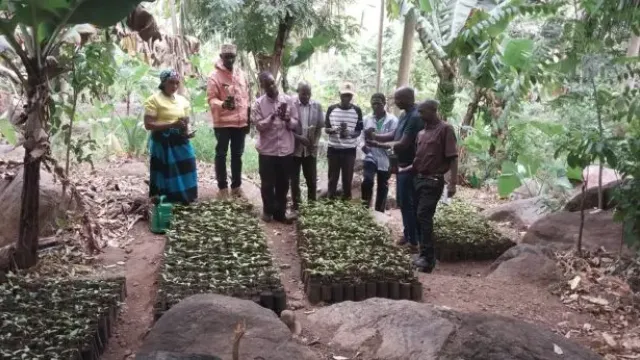
- Capacity Building and Market Adoption: TMA supports the sensitisation and onboarding of farmers, cooperatives, traders, buyers, and public institutions. Targeted engagement with sector regulators manages resistance from entrenched market practices and embeds new trading behaviours over time.
- Phased Commodity Expansion: Implementation follows a phased, risk-managed approach. Initial focus on priority agricultural commodities- sesame seeds, pulses, cashew nuts, cocoa, coffee, tea, and soybeans- has been followed by expansion into minerals, including gemstones, demonstrating the scalability of the TMX model beyond agriculture.
Elibariki Shammy, Country Director, Tanzania
Results To Date
Market Scale and Trade Value
The value of commodities traded on TMX increased by 290%, from $0.3 billion (TZS 0.7 trillion) in FY 2023–24 to approximately $1.1 billion (TZS 2.8 trillion) in FY 2024–25, following the scale-up of sesame seeds, pigeon peas, chickpeas, green grams, and cashew nuts on the digital platform. Between 2019 and 2022, over 56,000 metric tonnes of commodities were traded through the TMX Online Trading System, signalling a durable shift from informal markets.
Price Outcomes for Producers
During the 2024-25 cashew season, farm-gate prices peaked at approximately $1.7 per kilogram (TZS 4,190 per kg), a 91% increase compared to the previous season when cashew was traded outside the TMX platform. Structured digital trading also strengthened coffee price outcomes, with average prices of TZS 5,45 per kg for Robusta cherries and TZS 4,537 per kg for Arabica cherries.
Diversification into Minerals
In FY 2024-25, TMX expanded into minerals, including gemstones. The first online gemstones auction in December 2024 traded 176.26 kg valued at approximately $0.45 million (TZS 1.14 billion). A second auction in April 2025 generated about $0.54 million (about TZS 1.4billion), reflecting growing market confidence in structured digital mineral trading.
Public Revenue
In FY 2024-25, Local Government Authorities collected approximately $22.5 million (almost TZS 56.8 billion) linked to TMX-traded commodities. TMX platform revenues reached TZS 1.5 billion (approximately $0.6 million) over the same period, reflecting increased transaction volumes and sustained utilisation of the Online Trading System.