Financial Inclusion for Women in Trade Project
Women cross-border traders represent a substantial share of informal and small-scale trade in Tanzania, yet face persistent barriers to accessing affordable, reliable financial services. Limited financial and digital literacy,.
- Period
- 2023-2026
- Countries
- Tanzania
- Implementing partners
- · Financial Sector Deepening – Tanzania (FSDT) · Tanzania Women Chamber of Commerce (TWCC) · Commercial banks, mobile network operators, and financial service providers
- Participants
- Women-led MSMEs and women cross-border traders (WCBTs)Commercial banks, mobile network operators (MNOs), and financial service providers (FSPs)
Project rationale
Women cross-border traders represent a substantial share of informal and small-scale trade in Tanzania, yet face persistent barriers to accessing affordable, reliable financial services. Limited financial and digital literacy, weak linkages with formal banking institutions, and gaps in gender-disaggregated data constrain women’s ability to save securely, access credit, and grow their businesses. TMA, working with FSDT and TWCC, supports women traders and entrepreneurs to access appropriate digital financial services and build stronger links with financial institutions. The project generates evidence to inform gender-responsive financial sector reforms and policy, addressing both supply-side gaps in product design and demand-side constraints in financial capability
Target Results
- Increased access to affordable, gender-responsive digital financial services for women traders
- Improved financial literacy and business management capacity among women-led MSMEs
- Stronger engagement of policy and regulatory actors on gender-responsive financial inclusion
- Evidence and data generated to inform financial sector reforms and product design
Implementation strategy
The project is structured around four interconnected areas of action:
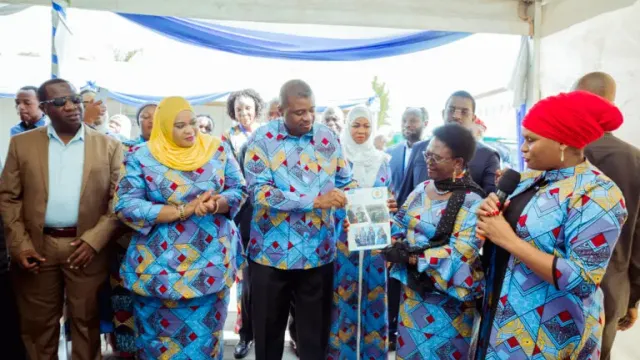
- Women Cross-Border Traders: Delivering financial literacy training, digital finance clinics, and access-to-finance fairs that connect women entrepreneurs to banks, mobile network operators, and investment institutions- supporting onboarding into formal financial systems.
- Government and Regulators: Collaborating with trade and financial authorities to advance gender-responsive financial inclusion policies, supported by evidence and policy briefs generated through the project.
- Private Sector and Financial Institutions: Partnering with commercial banks, MNOs, and financial service providers to pilot and scale accessible financial products for women entrepreneurs, including digital platforms such as iSOKO for record-keeping, invoicing, and credit profiling.
- Evidence and Research: Conducting a financial inclusion assessment and a financial diaries study to generate real-time insights on women traders’ financial behaviours, informing product design and regulatory reform.
Elibariki Shammy, Country Director, Tanzania
Results To Date
Financial Sensitisation and Access
- 244 women traders were sensitised on digital financial inclusion and available financial services.
- Over 105 women entrepreneurs were integrated into formal financial systems through the April 2025 Access to Finance Fair, including: 25 bank accounts opened with Azania Bank 28 entrepreneurs registered with the Unit Trust of Tanzania 17 enrolled on Vodacom's Lipa Namba service 8 registered for Dar es Salaam Stock Exchange capital market services Additional accounts opened with Mwanga Hakika Bank, Absa Bank, NMB, and TCB
- 25 bank accounts opened with Azania Bank
- 28 entrepreneurs registered with the Unit Trust of Tanzania
- 17 enrolled on Vodacom's Lipa Namba service
- 8 registered for Dar es Salaam Stock Exchange capital market services
- Additional accounts opened with Mwanga Hakika Bank, Absa Bank, NMB, and TCB
Credit and Lending
- 41 women-led MSMEs accessed loans totalling $146,500: $50,000 provided by CRDB Bank to 20 women entrepreneurs $96,500 provided by Mwanga Hakika Bank to 21 women entrepreneurs
- $50,000 provided by CRDB Bank to 20 women entrepreneurs
- $96,500 provided by Mwanga Hakika Bank to 21 women entrepreneurs
Evidence and Research
- A financial inclusion assessment was launched to inform policy and regulatory reforms.
- A financial diaries study is underway to strengthen the evidence base for gender-responsive financial service design.