EU-Funded Lobito Corridor Trade Facilitation Programme
The Lobito Corridor connects the mineral-rich regions of southern DRC and northern Zambia to global markets through Angola’s Port of Lobito, with the Benguela Railway at its core. As demand for critical minerals such as copper.
- Period
- 2026 - 2028
- Countries
- DR Congo
- Implementing partners
- Government of the DRC, LCTTFA, National customs authorities, corridor management agencies, logistics operators, and private sector stakeholders in the mining and transport sectors.
- Participants
- Mining companies, logistics providers, freight forwarders, customs and border agencies, rail and port authorities, traders operating along the Lobito Corridor, and border communities
Project rationale
The Lobito Corridor connects the mineral-rich regions of southern DRC and northern Zambia to global markets through Angola’s Port of Lobito, with the Benguela Railway at its core. As demand for critical minerals such as copper and cobalt rises, driven by industrial supply chains and the energy transition, the corridor is taking on growing strategic importance. Yet, its performance still falls short of its potential. Mineral shipments can take more than 40 days to clear, held back by fragmented border procedures, paper-based documentation and weak coordination across agencies and countries. The result is higher logistics costs, production uncertainty for mining companies and a corridor that is less reliable than global markets now require. The Lobito Corridor Trade Facilitation Programme is designed to address that gap. It supports reforms to simplify procedures, strengthen regulatory systems and improve cross-border coordination so that investments in rail and port infrastructure are matched by efficient trade processes.
Implementation strategy
As TMA’s flagship Critical Minerals project, the programme will follow a phased, operationally-led strategy designed to transform the Kolwezi-Dilolo route into a high efficiency trade artery, by tackling the current 40-day document clearance delays through the following pillars:
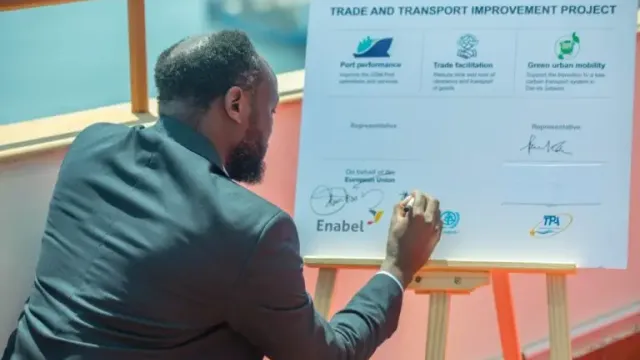
- Phased Operational Deployment: The implementation adopts a source-to-sea logic, starting in Kolwezi-the primary hub where mineral traceability, certification, and export clearance are concentrated. Following high-level ministerial and national launches in March 2026, the programme is currently in the consultation phase across Kolwezi, Dilolo, and Lobito to ensure the rollout aligns with local logistics realities
- Systems Digitalisation and Procedural Reform: A core priority is the transition from archaic, manual workflows to integrated electronic systems. By digitising trade and clearance processes, the programme will enable real-time data exchange between border agencies. This digital shift is paired with the simplification of documentation requirements, directly targeting the reduction of bottlenecks for mineral exports and general cargo.
- Strengthening Corridor Governance: To ensure long-term sustainability, the strategy focuses on deepening DRC-Angola cooperation. This includes providing technical and institutional support to the Lobito Corridor Transit Transport Facilitation Agency, creating a robust framework for regional governance and harmonized trade policies.
- Institutional Coordination: The programme will synchronise activities between entities to improve operations including: a. Customs Administrations b. Rail and Port Operators c. Border and Corridor Institutions.
- Structured Public-Private Engagement: Implementation is rooted in a collaborative model with the DRC Government, informed by the practical needs of the private sector. Through structured dialogue with mining and logistics companies, TMA will ensure that reforms are not merely administrative but are responsive to the operational challenges of the firms driving the corridor’s economy.
Aimé Nzoyihera, DRC Country Programme Director
Expected outcomes
- Reduced processing times for mineral consignments through improved transparency and predictability in export procedures among customs, other border agencies and private sector
- Lower trade and logistics costs
- Strengthened the competitiveness of Congolese exports within global mineral supply chains
- Regional and National launches were successfully completed (in March and April); initial field consultations underway in Kolwezi and Dilolo in DRC and Lobito in Angola.